Oops! Something went wrong while submitting the form.
Oops! Something went wrong while submitting the form.
.png)

.jpg)
Owner-Occupancy Verification for Short-Term Rentals in 2026: What Hosts Need to Know
A growing number of cities won't issue a short-term rental permit unless you can prove you actually live in the property. This is not a minor formality. It is quickly becoming the single rule that determines whether an investment property can legally operate as a nightly rental at all, and it looks different depending on where your property sits. If you list on Airbnb, Vrbo, Booking.com, or your own site, understanding how your city defines "primary residence" and how it verifies that claim is worth doing before your next renewal, not after a complaint lands on a code enforcement desk.
Most cities that regulate short-term rentals now fall into one of two camps: those that require the host to live in the property, and those that allow investor-owned units but treat them differently, usually with stricter caps, fees, or zoning limits. The trend over the past few years has clearly moved toward the first camp.
San Francisco requires that the unit offered as a short-term rental be the operator's primary residence, and the host must live in that unit for at least 275 nights per calendar year. Only one unit per host qualifies, even in a multi-unit building.
Boston's ordinance, codified under City Code Chapter 9, restricts STR registration to a host's primary residence, defined as the unit where the operator lives for at least nine months out of a twelve-month period. Boston originally allowed an "Owner-Adjacent" category for a second unit in the same two or three-family building, but that class was eliminated in a 2019 amendment after a court challenge. Non-primary-residence STRs are barred outright, regardless of the property's zoning.
Portland, Oregon sets its residency threshold at 270 days per year, one of twelve distinct short-term rental rules the city enforces, and treats the residency requirement as one of its stricter provisions.
St. Louis issues two separate permit types: a "Short-Term Rental, Occupied" permit for a host's principal residence, and a "Short-Term Rental, Non-Occupied" permit for investment properties, which are capped at four units per owner. As of this writing, a court order has paused the city's enforcement of the underlying ordinance, which is a useful reminder that even a clearly written rule can be in flux.
Jersey City's ordinance defines "owner-occupied" specifically, requiring that the owner, or in the case of an entity owner, at least one principal of that entity, reside in the rental unit or the primary unit on the same lot and formally identify it as their principal residence.
Across these cities, hosts commonly prove residency with a combination of a driver's license or state ID matching the property address, tax filings listing the property as the primary residence, utility bills, and voter registration. Several cities also require an annual sworn affidavit at renewal, and increasingly cross-check that paperwork against actual booking activity reported by the platforms.
Note on gaps: permit fees, exact renewal cadences, and penalty schedules vary by city and were confirmed for the jurisdictions above only where cited below. If your city isn't listed here, treat this as a pattern to check for, not a substitute for your local ordinance.
Separate from STR permitting, many hosts run into the homestead exemption, a property tax break offered by most states to owner-occupants. It reduces the taxable value of a primary home, sometimes by a flat dollar amount, sometimes by a percentage, but it is consistently limited to properties the owner actually lives in.
In Florida, the homestead exemption can reduce a primary residence's taxable value by up to $50,000 and comes paired with the "Save Our Homes" cap that limits how fast assessments can rise. Investment and short-term rental properties don't get either benefit, and Florida's 2025 property tax changes specifically tightened enforcement against exemption misuse and expanded scrutiny of short-term rental reclassification.
In Texas, the homestead exemption is limited to individual owners, not corporations or trusts, and applies to only one property even if an investor owns several. Renting a homesteaded property without notifying the county appraisal district can expose the owner to back taxes and penalties.
The practical effect is the same in most states: claiming a homestead exemption signals to the county that the property is your home, not a business, and operating it as a detached, remotely managed rental unit while holding that exemption is one of the more common ways hosts trigger a reassessment or an audit.
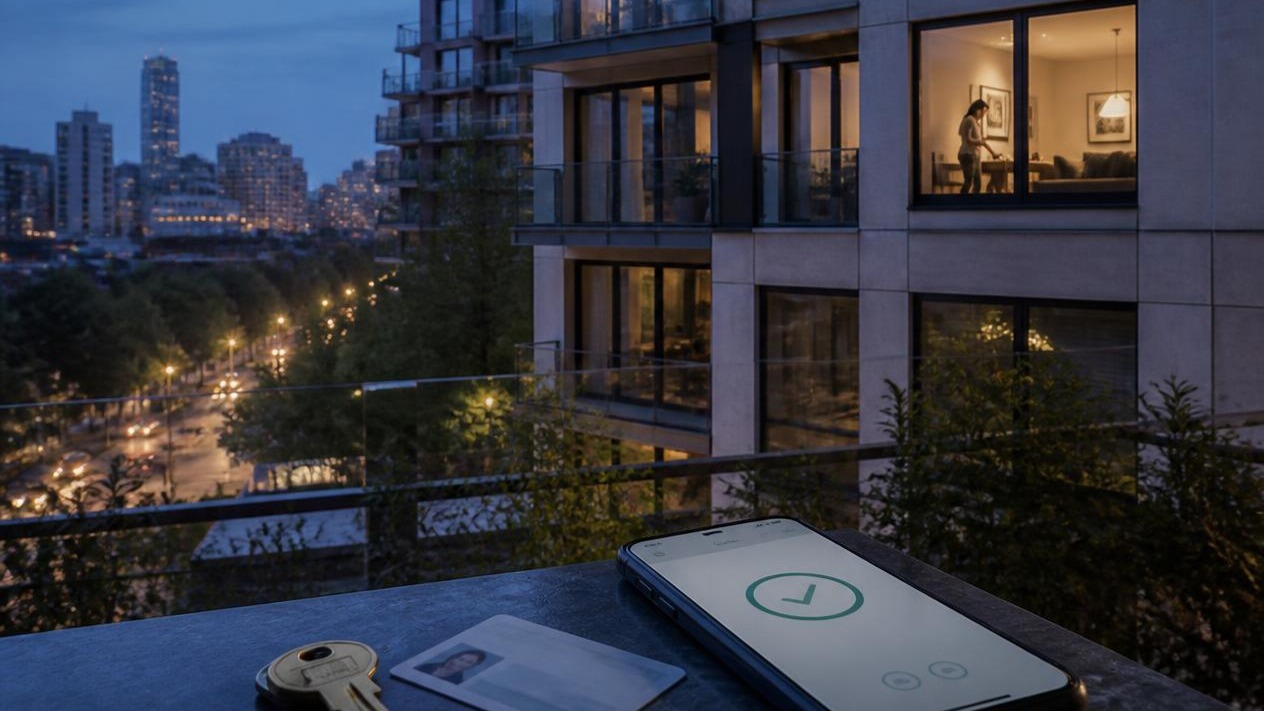
If you live in the property you're renting, whether that's the whole home or a spare room, you're likely already positioned to meet an owner-occupancy requirement, and your existing tax and ID paperwork probably supports it without much extra work.
If you don't live on-site, in a city like San Francisco, Boston, or Portland, you may not be eligible for a standard STR permit at all, regardless of zoning, unless the city offers a separate non-occupied category like St. Louis does. Operating anyway risks fines, permit revocation, or platform delisting once the city cross-references your listing's booking calendar against your permit.
For portfolio managers with multiple properties across different cities, this means the residency question has to be answered property by property and city by city. A rule that works in one jurisdiction may disqualify the exact same operating model somewhere else.
Owner-occupancy rules are becoming the default filter cities use to separate home-sharing from investment rentals, and the specific threshold, whether it's measured in nights per year, months of residency, or a formal affidavit, differs enough from city to city that assuming your old permit still fits is a real risk. Checking your jurisdiction's current definition before your next renewal is a lot less costly than finding out at an audit.
Not sure what this means for your property? Get your free compliance report at lodgecompliance.com

.jpg)
.jpg)
.jpg)
.jpg)


.png)

