Oops! Something went wrong while submitting the form.
Oops! Something went wrong while submitting the form.
.png)

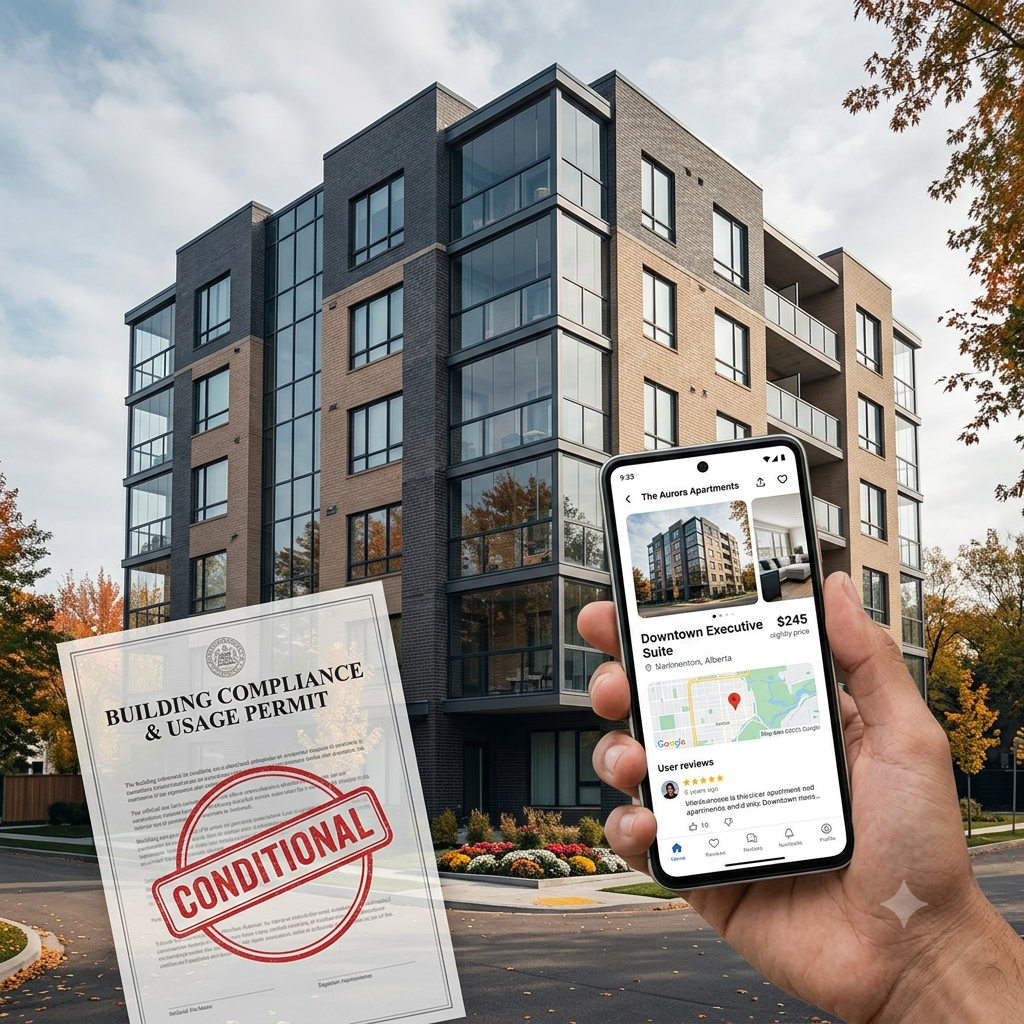
A short-term rental case out of Edmonton, Alberta made headlines this month, a property built with federal affordable-housing financing was instead operating as an Airbnb. It's tempting to read that as one company's bad decision in one city. It isn't. The same restriction shows up, in different forms, across some of North America's biggest STR markets, and enforcement against it is picking up speed.
In Edmonton, the Canada Mortgage and Housing Corporation confirmed that a property financed through its affordable-housing program can't legally be operated as a short-term rental. The property had a valid municipal business licence, and Edmonton actually requires one, but that licence never checked the separate, federal-level financing condition attached to the building. Two properties in the city have now surfaced under the same pattern, both caught only after persistent neighbour complaints, not proactive city monitoring.
The uncomfortable lesson: a city can fully license a rental, and the property can still be operating illegally under a completely different set of rules that sit above the municipal system.
San Francisco doesn't leave this to chance. Its short-term rental ordinance explicitly excludes Below-Market-Rate (BMR) units, Single-Room Occupancy buildings, and accessory dwelling units from short-term rental eligibility altogether. These categories exist specifically to preserve long-term affordable housing stock, and the city built the exclusion directly into its registration process rather than relying on financing agreements alone.
New York takes a related but distinct approach: rent-regulated and subsidized units are ineligible for short-term rental registration, on top of the city's broader rule requiring hosts to be present for any stay under 30 nights. Between the housing-status restriction and the presence requirement, the city has effectively closed off most of the paths that made subsidized units attractive for STR conversion in the first place.
Chicago's latest accessory dwelling unit ordinance, aimed at housing affordability, follows the identical logic. Where a property adds two or more ADUs, at least half must go to tenants earning at or below 60% of the area median income, and short-term rentals are explicitly prohibited in those units. It's a newer example of the same idea: when public policy creates affordable housing, short-term rental use gets written out of the deal from the start.
None of these cities coordinated with each other. The pattern repeats because the underlying tension is the same everywhere: affordable and subsidized housing programs exist to keep long-term housing stock available, and short-term rental income can be lucrative enough to tempt owners or operators to convert it anyway. Regulators have responded by attaching the restriction to whatever lever they control via financing terms in Edmonton, unit classification in San Francisco, rent status in New York, income-eligibility rules in Chicago.
If my property has a valid short-term rental licence, is it automatically eligible? Not necessarily. A licence confirms you meet the city's STR rules. It doesn't override separate restrictions tied to how the property was financed, classified, or subsidized.
How would I know if my property has an affordable-housing restriction attached? Check the original financing or deed documents, or the terms of any government program used to build, purchase, or renovate the property. These restrictions are usually not listed on the STR licence application itself.
Is this only a risk for investors or corporate owners? No. Individual owners who purchased or renovated using an affordable-housing-linked program can be just as exposed if they later list the property short-term.
Running a rental is enough work on its own. You don't have to track all of this yourself, let Lodge Compliance take it off your plate, handling permits, licensing, and tax registration so nothing slips through. Get a free property compliance report at lodgecompliance.com.

.jpg)
.jpg)
.jpg)
.jpg)


.png)

